
Planning a deck in New England: more than choosing boards
A practical deck planning guide covering layout, connections, structure, stairs, and questions for a construction quote.
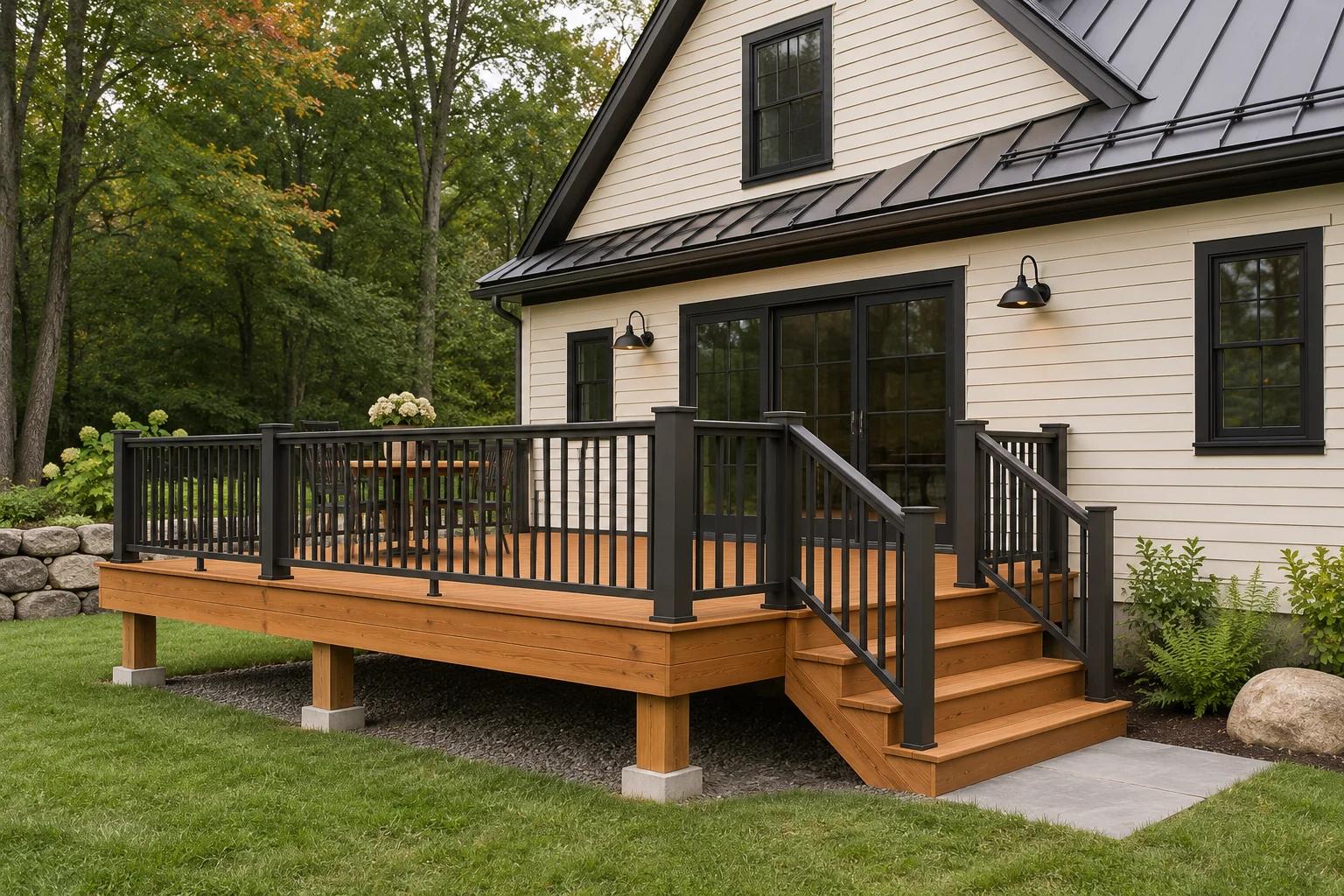
The starting point
A deck is an outdoor room and a structure connected to a particular site. The boards influence its appearance, but they are only part of the project. Start with use, access, and support before narrowing the material palette.
Keep these in mind
- Plan furniture and circulation before finalizing size.
- Ask about structure and the house connection.
- Compare stairs, guards, removal, and finishes in the scope.
Lay out the way you will use the space
Place the activities first: dining, sitting, access to the yard, or movement between doors. Include furniture and the walking space around it. Think about where stairs would make everyday routes easier.
Discuss the relationship between the deck and the house. Door locations, site levels, and the yard can shape a more useful layout than choosing a rectangle by area alone.
Understand the structure below the finish
Footings, posts, framing, and connections support the deck. The house connection and water-management details also deserve review. The correct design and requirements depend on the actual building and location.
When replacing an old deck, ask whether the proposal reuses any existing structure and how its suitability will be assessed. New boards do not establish that old supports are adequate.
Compare the whole construction package
A complete scope should address stairs, landings, guards where required, connections, and the stated finish materials. Clarify removal of an existing deck and any work supplied by others.
Bring photos, dimensions, access information, and material preferences to a quote discussion. A Frame can review the proposed deck construction without promising a universal price or start date.
A common question
Can deck boards be selected before the structure is reviewed?
You can discuss preferences, but finish choices should be coordinated with the designed structure. Existing supports must be assessed before reuse.